Enterprise-grade agents & automation
The canon says what good looks like. I already run it.
Andrew Ng, McKinsey, Bain, Anthropic, and OpenAI have converged on what separates production agents from demos. Most companies read those reports. Below is each principle from the published canon next to the thing in my production stack that implements it, on systems running four real business units today.
95%
of enterprise gen-AI pilots deliver no measurable P&L return
MIT NANDA, 2025
40%+
of agentic AI projects predicted canceled by end of 2027
Gartner, 2025
10–25%
EBITDA gains booked by AI leaders who scaled past pilots
Bain Technology Report 2025
95.1%
GPT-3.5 in an agentic loop vs 67.0% for GPT-4 zero-shot
Andrew Ng, HumanEval
Principle 1
Workflow beats model
What the canon says
Andrew Ng's most-quoted result: a weaker model wrapped in an agentic loop scored 95.1% on HumanEval, beating the next-generation model's 67.0% zero-shot. Bain and McKinsey say the same thing in operator language: redesign the workflow, not the task.
What I run
Every system I ship is a workflow first. The go-to-market engine at a $4B manufacturer is a plan-act-check loop with a Friday quality sweep; the model inside it has been swapped twice without the client noticing. The architecture is the asset.
Principle 2
Simplest pattern that works
What the canon says
Anthropic's reference essay is blunt: the most successful implementations use simple, composable patterns rather than complex frameworks. OpenAI's guide says start single-agent and earn your way to multi-agent.
What I run
My weekly sales-deck pipeline for a client's commercial team runs with zero LLM calls, because rules were enough and rules do not hallucinate. Agents get deployed where judgment is required, not where a cron job would do.
Principle 3
Evals are the operating system
What the canon says
Ng calls disciplined evals and error analysis the single biggest predictor of how fast a team makes progress. LangChain's survey of 1,300+ practitioners found quality is the number one production blocker, cited twice as often as cost.
What I run
Every generation in my stack is traced through Langfuse with model, tokens, latency, cost, business unit, and run id attached. Market-scan outputs pass a fact-check gate before a human sees them. Production failures become new eval cases.
Principle 4
Autonomy is granted, not assumed
What the canon says
OpenAI prescribes layered guardrails with human handoff on high-risk actions. McKinsey's agentic mesh calls it governed autonomy. Bain is bluntest: human-in-the-loop is the pragmatic reality for years.
What I run
My agents run under a control plane with per-agent budgets, heartbeats, and an issue queue. Irreversible actions gate on a human. Financial models carry explicit kill-switch criteria. Autonomy is a dial I turn up with evidence, never a default.
Principle 5
Composable and vendor-neutral
What the canon says
McKinsey's agentic mesh principles: composability, layered decoupling, vendor neutrality, observability by design. The architecture must survive agent sprawl and model churn.
What I run
My router runs eleven task tiers across six providers: Anthropic for supervision and elite writing, Gemini for extraction and research, Llama on Groq for fast classification, MiniMax for drafting, Whisper for voice, Voyage for embeddings. Any tier swaps by config, and live health probes catch a degraded provider before users do.
Principle 6
Economics are a design parameter
What the canon says
Anthropic measured multi-agent systems at roughly 15x the tokens of chat, worth it only when the task justifies it. Routing literature reports 40 to 85% cost reduction from sending each task to the cheapest model that clears the quality bar.
What I run
Classification never touches a frontier model in my stack; elite writing never touches a cheap one. Cost per run is traced next to quality, so the spend argument is a report, not an opinion. Gartner's top cancellation cause is escalating cost; mine is priced per workflow before it ships.
Principle 7
A business owner, not an IT pilot
What the canon says
Bain's winners put general managers, not IT, on the hook with data-driven targets. McKinsey found fewer than 10% of agentic programs reach meaningful scale, and pilot purgatory is the default failure mode.
What I run
Every agent I run belongs to a business unit with a number attached, because the four business units they run are mine. When an agent underperforms, it costs me money the same week. That feedback loop is the whole discipline.
New · interactive
The architecture
The full platform drawn honestly: business view for hiring managers, system view for builders, and a traceable request. Click any component.
Explore the map →
New · interactive
The method
Size the problem, find the value, pick the lightest tool: eliminate, redesign, rules, analytics, model, or agent. Walk the six questions yourself.
Walk the ladder →
The artifacts · slide minis
The work, in miniature.
Live screenshots of systems I built and run, presented the way a deck would present exhibit minis. Every one links to the real, working thing.
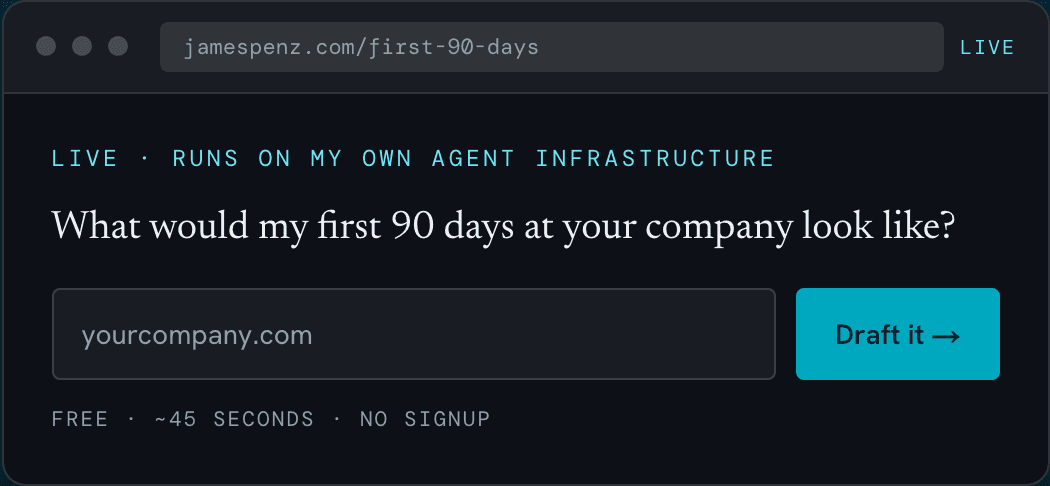
01 · The proposal agent
Drafts my first 90 days at any company, engagement-letter structure, honest readiness score
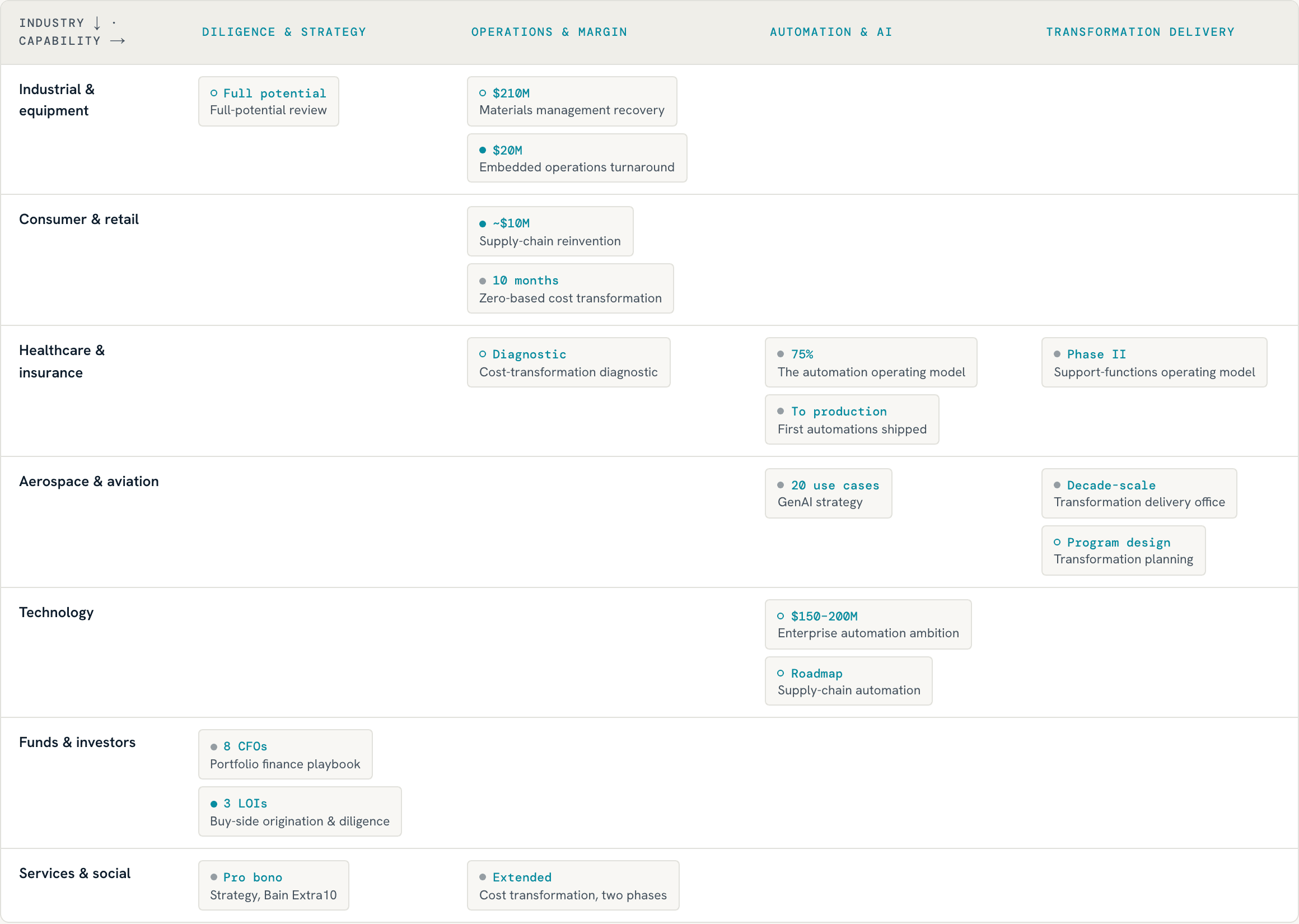
02 · The engagement matrix
19 engagements by industry and capability, realized vs sized badged, click-to-open deal sheets
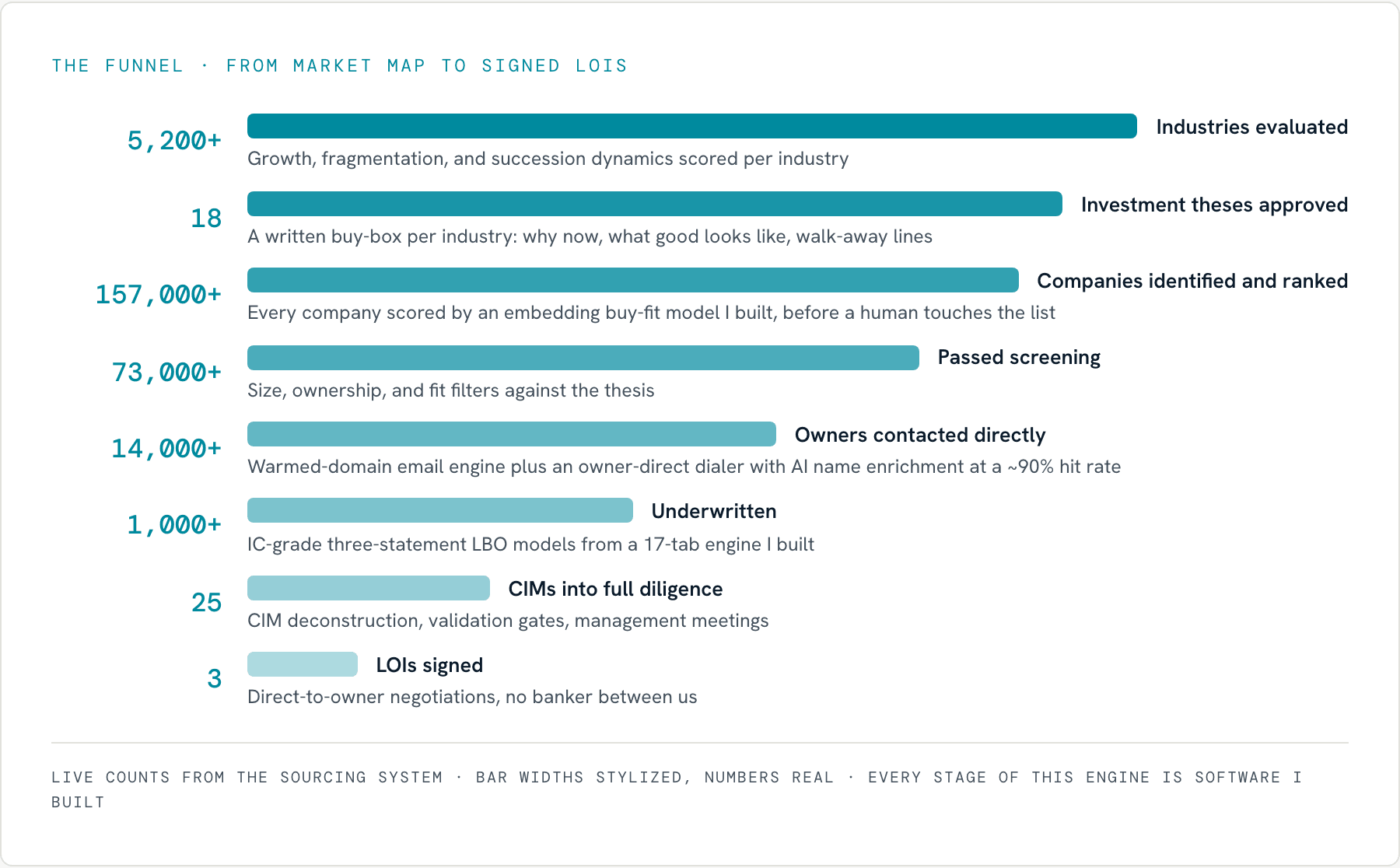
03 · The origination funnel
157,000 companies to 3 signed LOIs, live counts from software I built
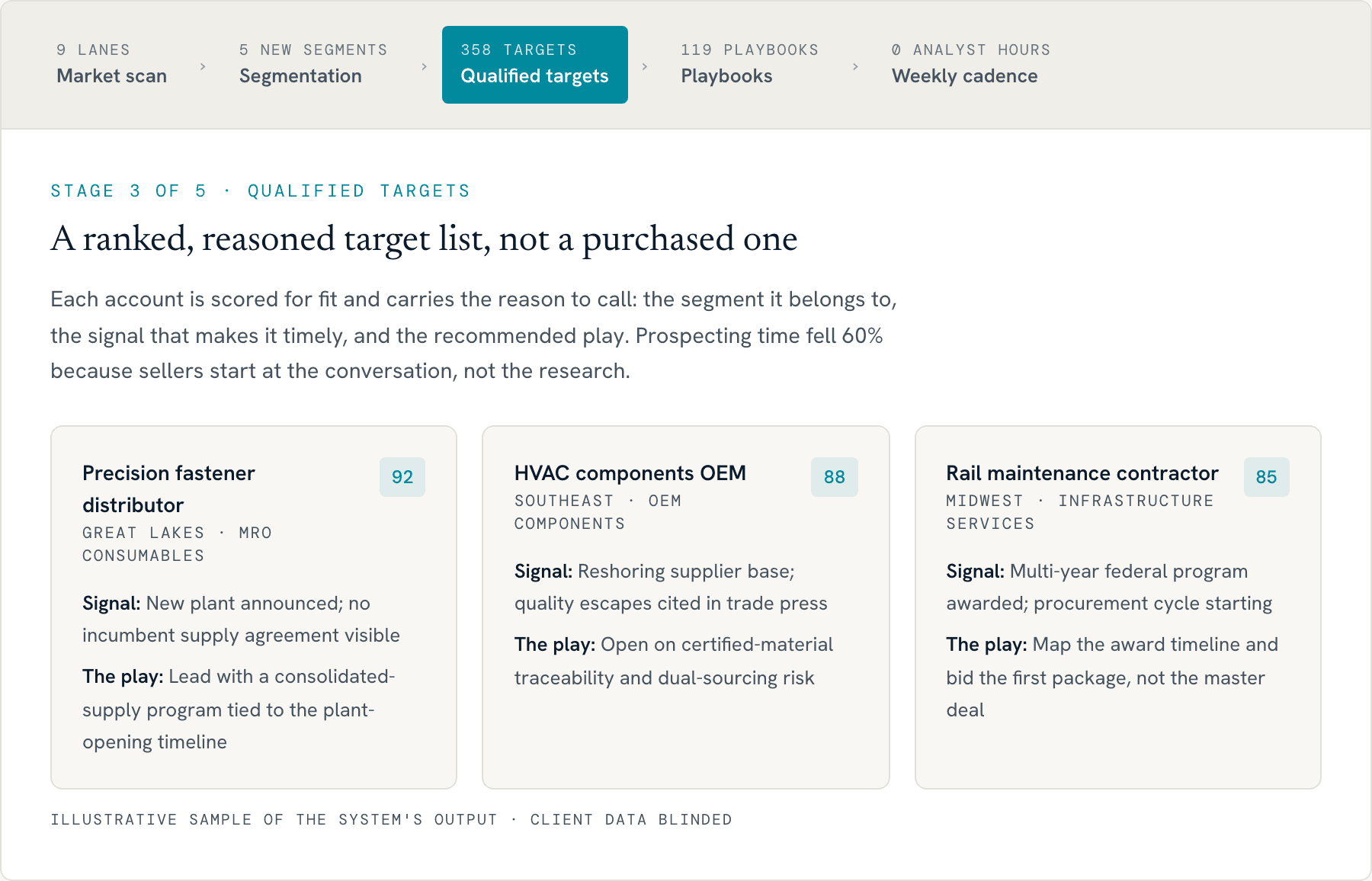
04 · The GTM engine
Market scan to 119 playbooks to a weekly zero-analyst cadence at a $4B manufacturer
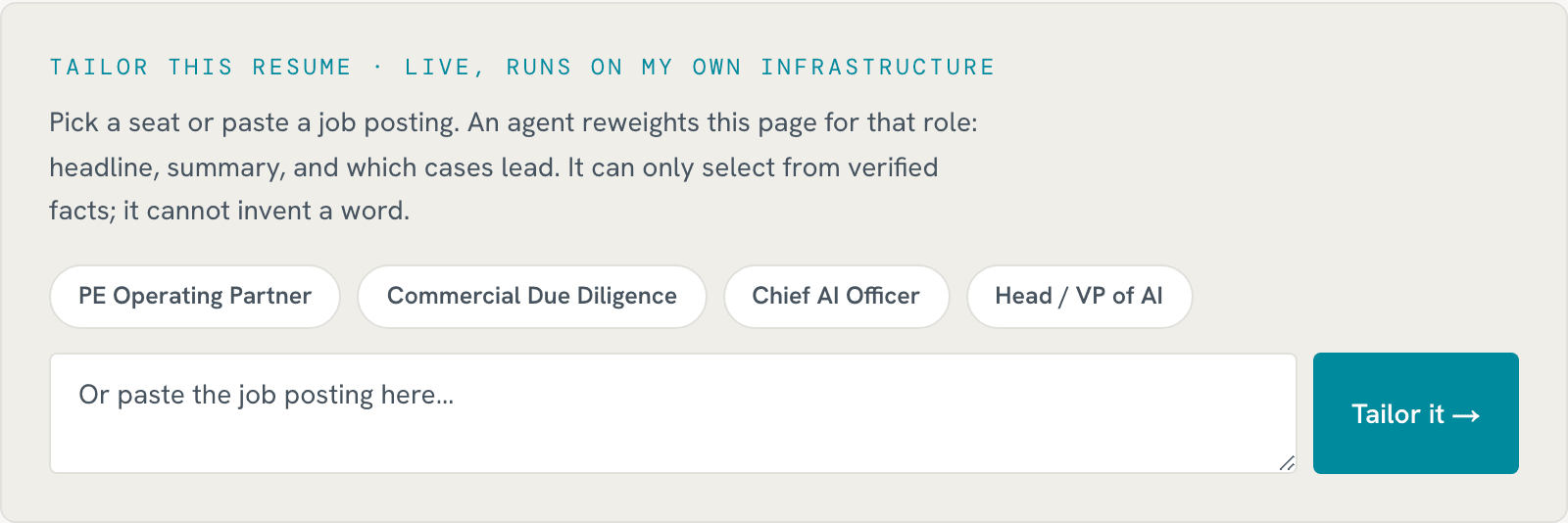
05 · The resume tailor
Paste a job posting, get a role-weighted resume and cover letter from verified facts only
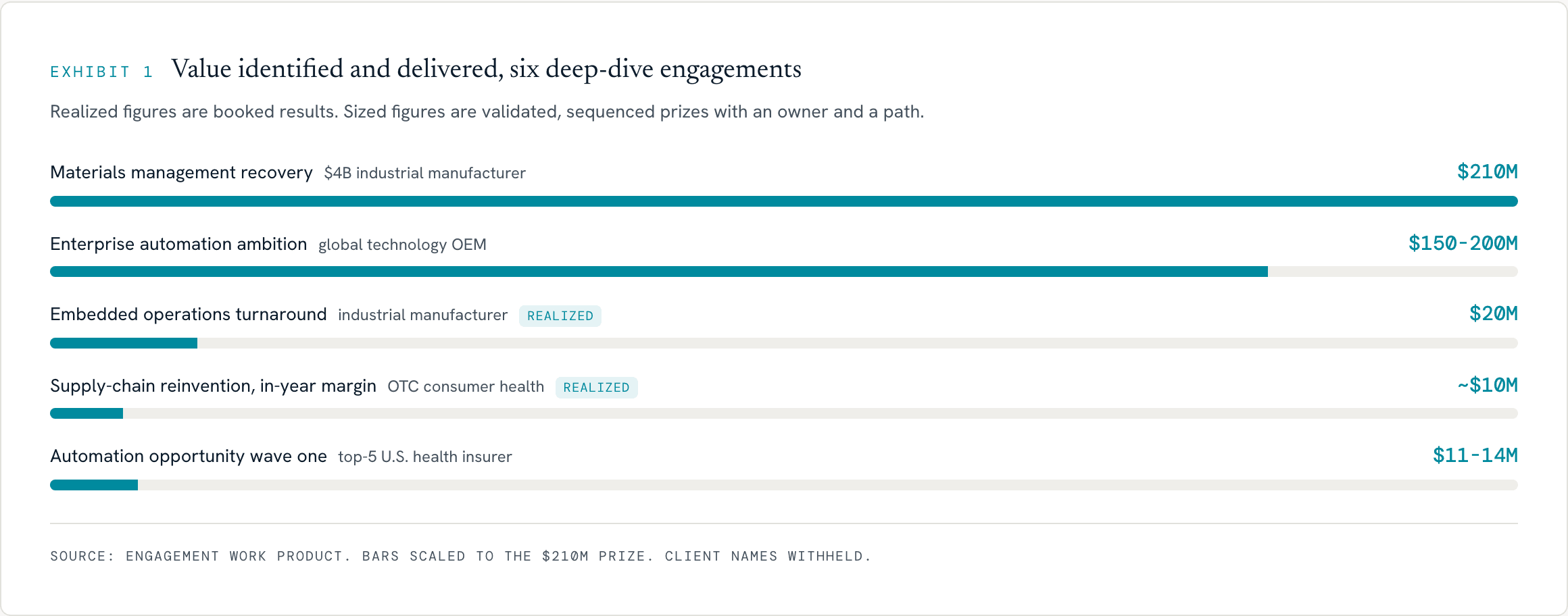
06 · The exhibit system
Numbered, titled, sourced exhibits rendering the track record to deck standard
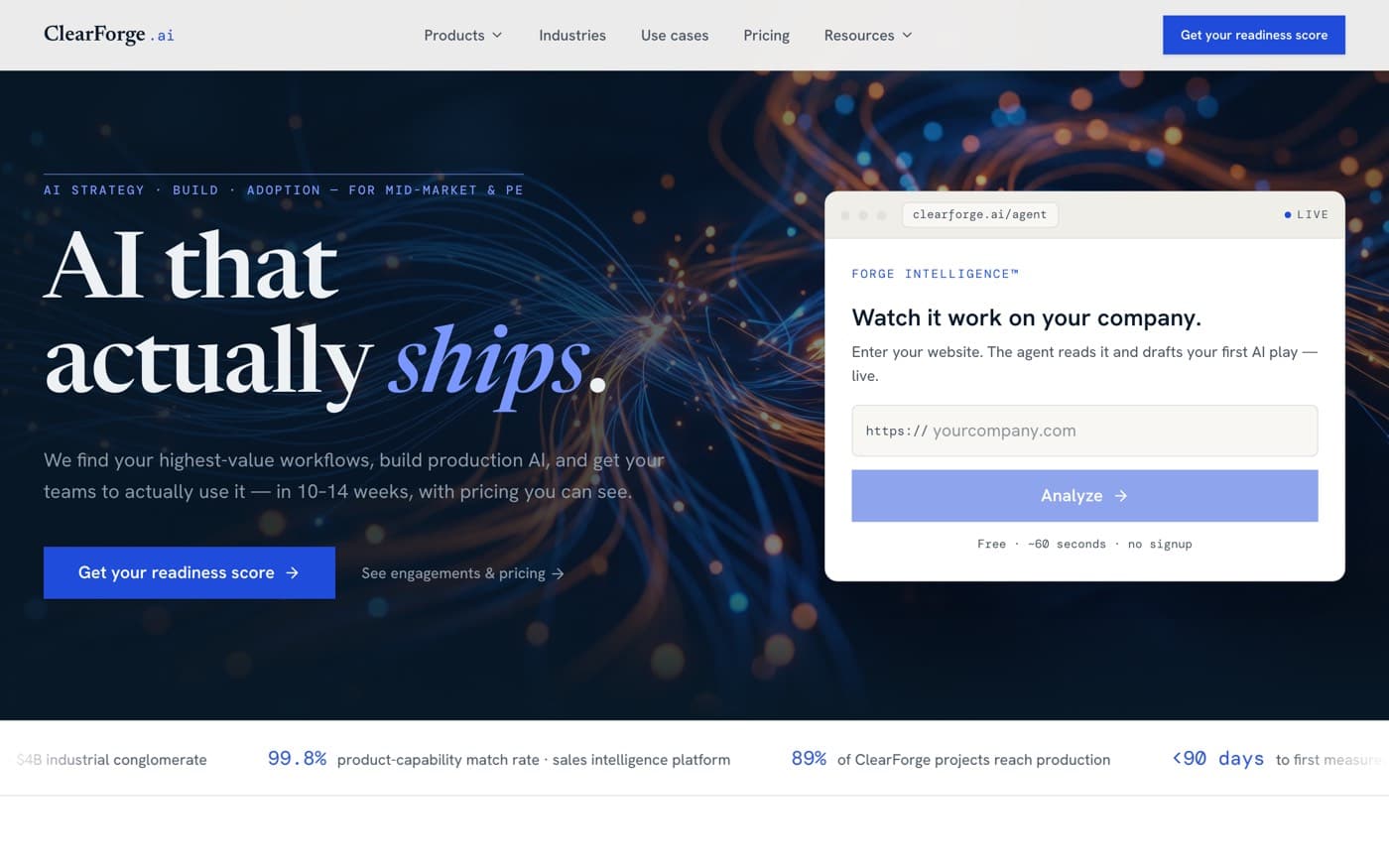
07 · clearforge.ai
The firm's site: live-agent hero, same build discipline, shipped to production
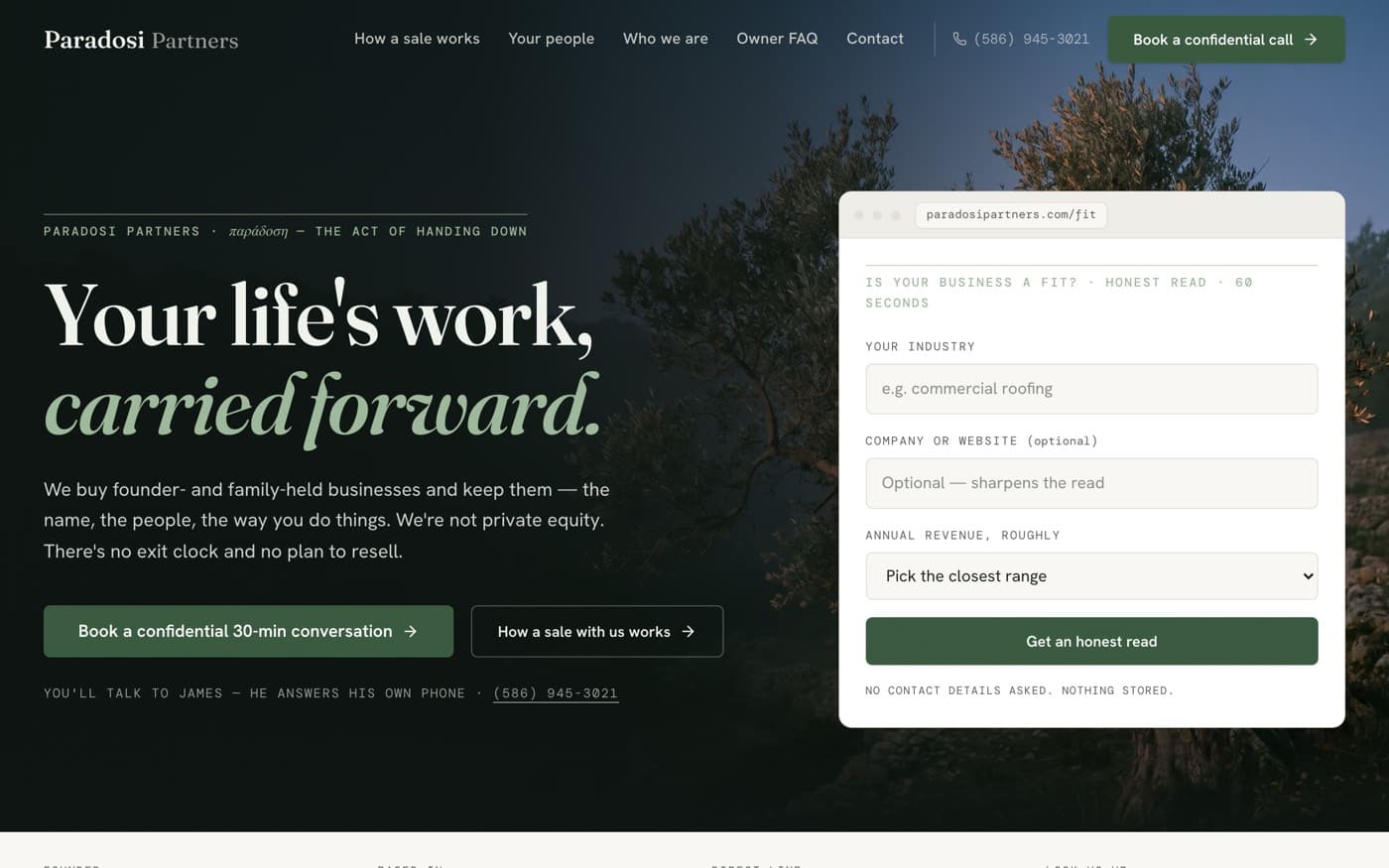
08 · paradosipartners.com
The search fund's owner-facing site: two paths, seller-first register
Where this sits on Bain's agent maturity ladder
L1
Copilots and retrieval
Where ~90% of vertical use cases stall
L2
Single-task agents
One workflow, supervised
L3 · where I operate
Cross-system orchestration
Agents acting across systems under governance
L4 · where I operate
Multi-agent constellations
Specialized agents collaborating on shared goals
My production system is an orchestrator-worker constellation: a supervisor routes work across 20 specialized agents and 11 model tiers, with temporal graph memory, per-agent budgets, and full trace observability. It is the architecture McKinsey calls a mesh, running on my own P&L rather than in a slide.
Sources: Andrew Ng, The Batch and DeepLearning.AI agentic patterns; McKinsey QuantumBlack, Seizing the Agentic AI Advantage (2025); Bain Technology Report 2025; Anthropic, Building Effective Agents and Demystifying Evals; OpenAI, A Practical Guide to Building Agents; MIT NANDA, The GenAI Divide (2025); Gartner (2025); LangChain State of Agent Engineering. Happy to talk through any of them against the live system.
The agent on the homepage is this stack, live.
What has this actually delivered?
Track record →